Viking Words in English for Kids
The 24 words in this guide form four groups—roles, ships, objects, and daily life—for practice in sets of six. Viking Words in English for Kids: Vocabulary and Activities provides vocabulary, model sentences, and history-based games. Start with nouns such as ship, shield, and oar, then add verbs such as sail, row, trade, and carve. Children learn to understand stories, describe pictures, and discuss Viking craft, farming, travel, trade, and conflict.
📥 Viking Words in English
Learn, use, and remember key words from Viking life
Leave your email — we'll send the PDF to your inbox.No spam — the PDF plus one short reminder. Unsubscribe anytime.
Core Words for Viking Life
For Viking Words in English for Kids: Vocabulary and Activities, begin with six words from one category. Add another group after your child recognises and uses them. Small sets suit beginners; older children can build detailed sentences.
The 24-word set covers roles, ships, objects, and daily life. Read each word aloud, show a picture or sketch, and model a sentence.
English contains Old Norse connections. Examples include sky, egg, knife, window, law, take, they, and their. These everyday English words do not name Viking objects.
Using the Words in Context
Practise Viking Words in English for Kids: Vocabulary and Activities by moving from naming to describing: “The crew rows the longship,” “The trader carries cargo,” or “The craftsperson makes a brooch.” Older learners can connect ideas: “The crew raised the sail because the wind was strong.”
Sentence tip Keep one part familiar and change one word: “The crew carries cargo,” “The trader carries cargo,” and “The farmer carries food.”
Ask your child to draw a longship and label its mast, sail, oars, crew, and cargo. Cover the labels, then request a spoken description. A short sentence builds more language than an isolated word.
Build a Viking Scene
Choose six words from the table. Draw one scene containing the six, then describe it in three sentences. For a challenge, add because, but, or when.
Activities for Different Ages
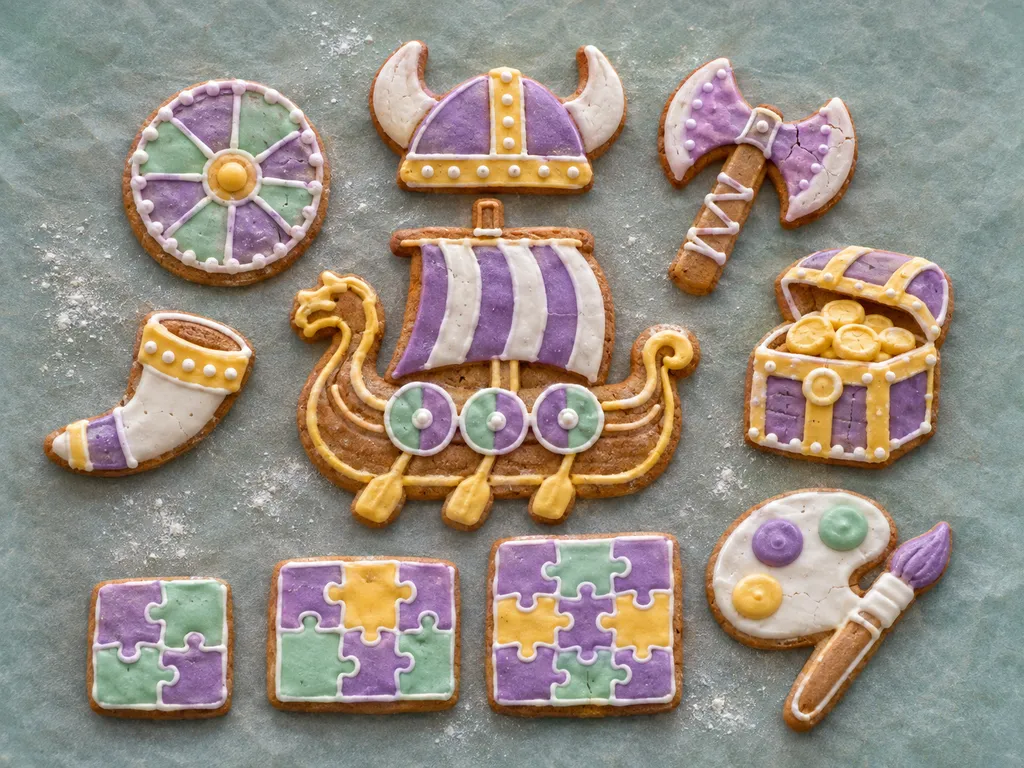
Viking Words in English for Kids: Vocabulary and Activities changes with language skills. Younger children need pictures, movement, and repetition. Older learners can sort evidence, compare meanings, and justify choices.
When your child needs support, reduce the word count, not the subject. A beginner can say, “a shield.” A confident learner can explain, “The warrior carried a shield for protection.” Both show progress.
Activity checklist
- Choose one group of four to six related words.
- Show a clear picture or object for each word.
- Say each word in a complete model sentence.
- Ask your child to point, act, sort, or draw.
- Finish with two sentences made without help.
A Simple Home Practice Plan
Practise three or four times across the week. Review four known words, introduce two new ones with pictures, and play odd one out, picture bingo, or “Captain says.” Finish with one recalled word and one sentence without visual prompts.
Multilingual children may connect a Viking word to another known language. This supports understanding, but the task should end with an English phrase or sentence. During one-to-one lessons with LearnLink tutors, pictures, gestures, and short questions support learning without presenting a home language as a problem.
Common Mistakes to Correct Early
Do not treat Viking and Norse as synonyms. Norse covers medieval Scandinavian language and culture. Viking often describes travellers who joined overseas expeditions. Separate historical evidence from later costumes and legends.
Myths and facts
Myth: Everyone in Norse society was a warrior or raider.
Fact: Norse communities also included farmers, traders, sailors, and skilled craftspeople.
Myth: Horned helmets were normal Viking battle equipment.
Fact: Horned helmets belong to the popular modern image of Vikings, not their standard battle wear.
Correct errors by modelling the right form. If your child says, “Two Viking is rowing,” answer, “Yes, two Vikings are rowing the longship.” The reply preserves the idea while supplying the plural noun and verb pattern.
- Choose five Viking words and sort them into people, objects, and actions.
- Model each word in a complete sentence, then invite an accurate repetition.
- Compare two easily confused words using simple drawings and matching labels.
- Correct one mistake gently, then ask your child to try again.
- Review the five words through matching, charades, or homemade picture cards.
When a word has several meanings or pronunciations, Cambridge Dictionary is a useful check before turning it into child-friendly examples.
Frequently Asked Questions
How Many Viking Words Should My Child Learn at Once?
Start with four to six words for a child new to English or online learning. Use one group, such as ship parts or roles. Add more after your child recognises the words and uses two in sentences. Older or more confident learners may handle eight to ten words, but active use matters more than volume.
Are All Viking-related Terms Interchangeable?
No. Terms may describe a culture, role, object, or activity. Teach each word with a definition and example sentence so children distinguish related historical terms.
How Can a Multilingual Family Practise This Vocabulary?
Connect each new English word with a known word, picture, or gesture in another language. Then return to an English phrase: “a wooden shield,” “row the ship,” or “the trader has cargo.” Avoid translation-only tests. Children should understand and use the English word in a meaningful sentence.
Can Viking Vocabulary Help with General English?
Yes. Viking Words in English for Kids: Vocabulary and Activities practises language patterns within a historical theme. Children work with plurals, action verbs, adjectives, prepositions, and sequence words. “The crew put the cargo on the ship” builds language transferable to stories, classroom tasks, and everyday descriptions.
Start with four words and three steps: name each item, model a sentence, and ask your child to create one. Repeat three times this week, then check for two sentences without prompts.
Start your child's English journey today — book a trial lesson with LearnLink.
Stay updated on our latest tips and resources by following us on Instagram LearnLink.